
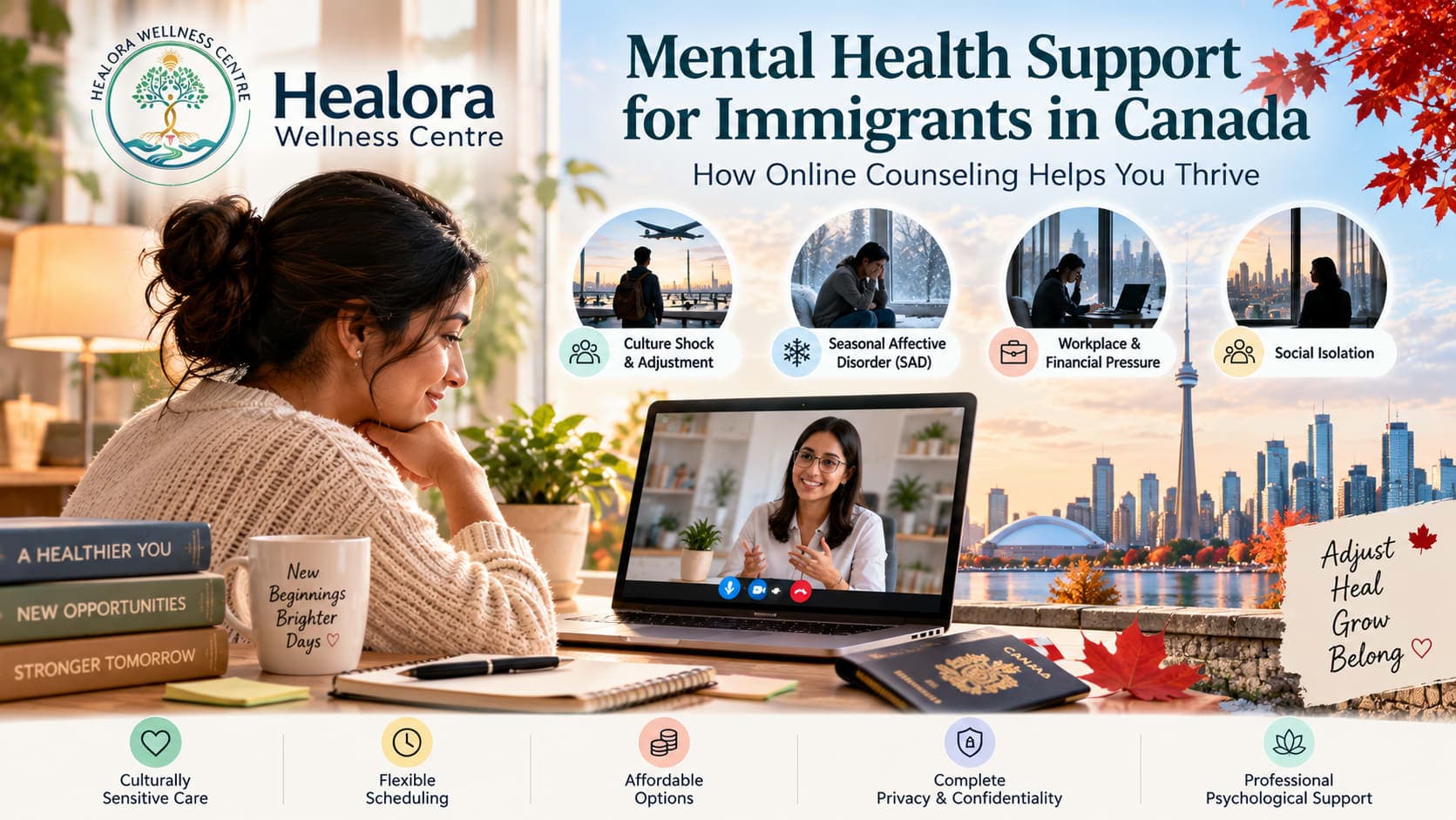
Mental Health Support for Immigrants in Canada: How Online Counselling Helps You Thrive
Introduction: Adjusting to Life in Canada
Moving to Canada can be an exciting new chapter filled with educational opportunities, career growth and the promise of a better future. However, settling into a new country can also bring emotional challenges that are not always easy to discuss.
Immigrants, newcomers and international students may experience culture shock, homesickness, social isolation, financial pressure and difficulties adjusting to unfamiliar workplaces or educational systems. Long winters, limited daylight and being separated from family can also affect emotional well-being.
These experiences do not mean that you are failing to adapt. Adjusting to a new environment takes time, and seeking support can be an important part of the process.
At Healora Wellness Centre, we offer online counselling and psychological consultation services designed to make professional support more accessible. Depending on your needs and the availability and eligibility of an appropriately qualified professional, online sessions may provide a convenient way to discuss emotional difficulties from a familiar environment.
Common Mental Health Challenges Immigrants Face in Canada
Every newcomer has a different experience. Some people adjust quickly, while others need more time to establish relationships, feel secure and develop a sense of belonging.
1. Culture Shock and Acculturative Stress
Moving to a different country often means adapting to new social expectations, communication styles, customs and everyday routines.
You may feel uncertain about how to build friendships, communicate at work or maintain your cultural identity while adjusting to Canadian society. These experiences can contribute to acculturative stress, frustration and emotional exhaustion.
Counselling can offer a space to explore these feelings, develop coping strategies and identify practical ways to adjust while maintaining meaningful connections to your background.
2. Loneliness and Social Isolation
Leaving family members and long-standing friendships behind can make even ordinary days feel difficult. Time-zone differences, work schedules and the cost of travelling home may make it harder to stay connected with loved ones.
International students and newcomers may also find it challenging to establish new friendships or develop a support network.
Building community connections, participating in local activities and maintaining regular contact with trusted people can help. Psychological counselling may also help you explore loneliness and develop strategies for strengthening social connections.
3. Winter-Related Mood Changes
Canadian winters can involve cold temperatures, shorter daylight hours and reduced opportunities for outdoor activities. Some people experience changes in mood, sleep, energy and motivation during the darker months.
Seasonal affective disorder (SAD) is a form of depression associated with a seasonal pattern. However, not everyone who feels low during winter has SAD, and persistent symptoms deserve appropriate assessment.
If seasonal changes are affecting your daily life, a qualified mental health professional can help you explore your symptoms and discuss suitable support options.
4. Employment, Financial and Academic Pressure
Starting over professionally can be demanding. Newcomers may face difficulties finding work in their field, obtaining professional credentials, understanding workplace expectations or managing a high cost of living.
International students may experience academic pressure, uncertainty about their future and the challenge of balancing studies with employment.
When these demands continue without enough rest or support, they may contribute to chronic stress, anxiety, sleep difficulties and burnout.
Counselling can help you identify stressors, develop healthier routines and work towards realistic personal and professional goals.
5. Family Responsibilities and Identity Challenges
Immigration can change family roles and relationships. Partners may adjust at different speeds, parents may worry about their children's well-being, and individuals may feel caught between the expectations of their home culture and their new environment.
Questions about belonging, identity, independence and family responsibilities can be emotionally demanding.
A supportive counselling environment can help you examine these concerns, communicate more effectively and identify approaches that reflect your personal values.
How Online Counselling Can Support Immigrants in Canada
Online counselling allows eligible clients to connect with a mental health professional through a video or other approved remote consultation method. For newcomers who are still learning how to navigate local services, this format may offer additional convenience.
1. Culturally Responsive and Respectful Support
Your cultural background can influence how you understand stress, relationships, family responsibilities and mental health.
Having the opportunity to discuss these experiences without fear of judgement can make counselling feel more comfortable. Language can also matter when expressing complicated emotions.
If available, sessions in Malayalam or English may help you communicate more naturally. When choosing a provider, ask about language proficiency, cultural experience and professional qualifications rather than assuming every practitioner offers the same services.
Healora aims to provide a respectful environment where clients can discuss personal concerns and work towards meaningful goals.
2. Convenient Access From Home
Travelling to an unfamiliar clinic, managing transport or taking time away from work can make in-person appointments difficult.
Online consultations may allow you to attend a session from home or another private location with a reliable internet connection. This can be particularly useful during periods of severe weather or when travelling is inconvenient.
Remote appointments are not suitable for every situation, however. Your circumstances, the type of support needed and the professional's ability to provide services in your location should all be considered.
3. Scheduling That Fits Your Routine
Newcomers often balance shift work, university schedules, childcare and family responsibilities. Finding a suitable appointment time can therefore be challenging.
Online sessions may reduce travel time and offer more flexibility, depending on the provider's availability.
Before booking, confirm the available appointment times, session duration and any time-zone differences. This is particularly important if you work irregular hours or live in a different Canadian time zone from your provider.
4. Understanding Costs Before You Book
The cost of mental health support can be an important consideration for students, newcomers and families managing settlement expenses.
Online counselling may reduce some travel-related costs, but it is not automatically cheaper than in-person care. Fees vary according to the provider, service type, qualifications and location.
At Healora Wellness Centre, review the applicable consultation fees and service details before booking. You should also check whether your insurance plan or employee benefits cover the service, as eligibility varies.
5. Privacy and Confidentiality
Discussing mental health concerns can feel personal, especially when you are unfamiliar with local services.
Professional confidentiality and secure technology are important considerations when choosing an online provider. Before your session, ask how your information is handled, what platform is used and what confidentiality limitations may apply.
You can also improve your privacy by attending from a quiet room, using a secure internet connection and avoiding shared devices where possible.
No online service should promise absolute confidentiality in every circumstance; legal and professional exceptions may apply.
What Concerns Can Online Counselling Help You Explore?
Depending on the professional's qualifications and scope of practice, counselling may help you understand and manage concerns such as:
-
Anxiety and ongoing stress: Explore worries, identify triggers and practise coping strategies.
-
Low mood and depressive symptoms: Discuss persistent sadness, reduced motivation and changes in everyday functioning.
-
Culture shock and adjustment difficulties: Work through changes in identity, routine, expectations and belonging.
-
Loneliness and social connection: Explore barriers to building relationships and identify opportunities for community engagement.
-
Academic and career stress: Develop practical approaches to workload, uncertainty, boundaries and professional transitions.
-
Relationship and family concerns: Improve communication and explore conflicts arising during major life changes.
-
Self-esteem and identity: Understand how migration and changing social roles may influence confidence and self-perception.
-
Sleep and routine difficulties: Explore habits and stressors that may affect rest and everyday well-being.
A consultation does not guarantee a particular outcome or replace every form of mental health treatment. A professional can help determine what type of support may be appropriate for your individual circumstances.
Practical Ways to Protect Your Mental Well-Being After Moving to Canada
Professional support can be valuable, but everyday habits and social connections can also contribute to adjustment.
Build a Support Network
Stay connected with trusted friends and family while making opportunities to meet people locally. Community groups, student associations, cultural organisations and volunteering can help you develop a sense of belonging.
Establish a Sustainable Routine
Try to maintain regular sleep and meal times, include physical activity that suits your circumstances and make time for enjoyable activities. Small, consistent habits may help you feel more grounded during periods of change.
Make Time for Daylight and Outdoor Activities
During winter, spend time outdoors when practical and safe, and keep your living environment bright during the day. If you experience persistent seasonal mood changes, consult a qualified professional about appropriate assessment and treatment options.
Set Realistic Expectations
Adapting to a new country is not a competition. Employment, friendships, financial stability and a sense of belonging can take time to develop.
Recognise progress in small steps and seek practical help when challenges become difficult to manage alone.
Ask for Help Early
You do not need to wait until your symptoms become severe to speak with a professional. If emotional difficulties persist, interfere with your daily life or become overwhelming, consider seeking an appropriate assessment.
How to Prepare for Your First Online Counselling Session
A little preparation can help you make better use of your appointment.
-
Identify your main concerns. Consider what has been difficult recently, when the feelings began and how they affect your routine.
-
Think about your goals. You might want to manage anxiety, adjust to a new environment, improve relationships or understand persistent low mood.
-
Prepare questions. Ask about the professional's qualifications, experience, approach, fees and confidentiality practices.
-
Choose a private setting. Find a quiet place where you can speak comfortably without unnecessary interruptions.
-
Discuss practical needs. Mention your preferred language, accessibility requirements and scheduling constraints.
-
Understand the next steps. Ask what support may involve and how progress will be reviewed.
You do not need to have everything figured out before your first appointment. Explaining what you are experiencing is a useful starting point.
Why Consider Healora Wellness Centre?
Healora Wellness Centre provides online wellness and consultation services for people seeking support with their health and well-being.
If you are considering an online consultation, explore the available services, practitioner profiles and appointment details to determine whether a particular professional is appropriate for your needs.
You can begin by visiting our online counselling service or exploring our online psychology consultation service.
Before booking, confirm that the practitioner is appropriately qualified and legally permitted to provide the service to someone located in your Canadian province or territory. Professional registration, insurance and cross-border practice requirements may vary.
Frequently Asked Questions
1. Can immigrants in Canada access online counselling?
Yes. Online counselling may be an option for immigrants and newcomers, provided the service is appropriate for their needs and the professional is authorised to serve clients in their location. Check eligibility and appointment arrangements before booking.
2. Can online counselling help with culture shock?
Counselling may help you explore the emotional effects of cultural adjustment, identify stressors, develop coping strategies and work towards a stronger sense of belonging. Individual experiences and outcomes vary.
3. Can I find Malayalam-speaking online counselling?
Language availability depends on the provider and practitioner. If you prefer Malayalam, confirm that the professional can conduct sessions in Malayalam before scheduling an appointment.
4. Can international students in Canada seek online mental health support?
International students may consider online counselling for concerns such as academic stress, loneliness, anxiety and adjustment difficulties. They can also investigate student wellness services, campus counselling and local community resources.
5. Is online counselling affordable?
Costs vary by provider, qualifications, session type and location. Ask for the full fee before booking and check whether your insurance or student benefits cover the service.
6. Is online counselling confidential?
Professional confidentiality and appropriate data protection are important, but confidentiality is subject to applicable laws and professional obligations. Ask the provider about privacy practices, record handling and any exceptions before beginning.
7. When should I seek professional mental health support?
Consider seeking support when emotional difficulties persist, affect sleep or daily functioning, interfere with relationships, or feel difficult to manage independently. If you are in immediate danger or experiencing a mental health emergency in Canada, call 911 or go to the nearest emergency department. You can also call or text 988 for suicide crisis support in Canada.
Take the Next Step Towards Your Well-Being
Moving to Canada can involve significant changes, but you do not have to navigate every challenge on your own.
Whether you are adjusting to a new culture, coping with loneliness, managing academic pressure or trying to understand persistent stress, seeking appropriate support can be a constructive step towards better emotional well-being.
Explore Healora Wellness Centre's online counselling services and online psychology consultations to learn more about available options.
Your well-being matters, wherever your journey takes you.
Disclaimer: This article is for general educational purposes only and does not constitute medical advice, diagnosis or treatment. Online services may not be appropriate for every concern. Confirm practitioner qualifications, location eligibility and service suitability before booking.